Showing posts with label 2013. Show all posts

Saturday, February 23, 2013

2013 Goodwood FoS Central Feature To Mark 50 Years Of The Porsche 911


We’re starting to lose count of all the automotive anniversaries taking place this year, but one of the most significant is the 50th anniversary of the Porsche 911 sports car.

Porsche 911 sports car

Porsche 911 sports car

Porsche 911 sports car

Porsche 911 sports car

Clearly Porsche has a lot planned to mark the occasion but so do organizers of the Goodwood Festival of Speed, an event that in 2013 is also celebrating its own 20th anniversary.

Each year during summer, the grounds outside Goodwood House in Goodwood, England, plays host to some of the most exciting, unique, and historic cars of the past and present.

Also each year, a gigantic sculpture celebrating a theme is unveiled.

Organizers of the festival have now confirmed that 2013’s sculpture will honor the 911. They say it’s only appropriate, as the iconic sports car is one of only a few cars that have featured at every single Goodwood Festival of Speed, from the first event in 1993--when an unexpectedly high 27,500 enthusiasts turned up--to the 185,000+ visitors that attended the event last year.

In addition to the sculpture, a procession of racing and road-going 911s will also be appearing, and no doubt they will be attacking the 1.16-mile Goodwood hillclimb, spitting gravel sideways around the Forest Rally Stage, or sitting serenely at the Cartier ‘Style et Luxe’ concours lawn.

There will also be several other historic Porsche models present, including the 356, 908, 917 and 962.

This year’s Goodwood Festival of Speed takes place from July 11-14. For our ongoing coverage of the event

Articles Source : motorauthority

Friday, February 22, 2013

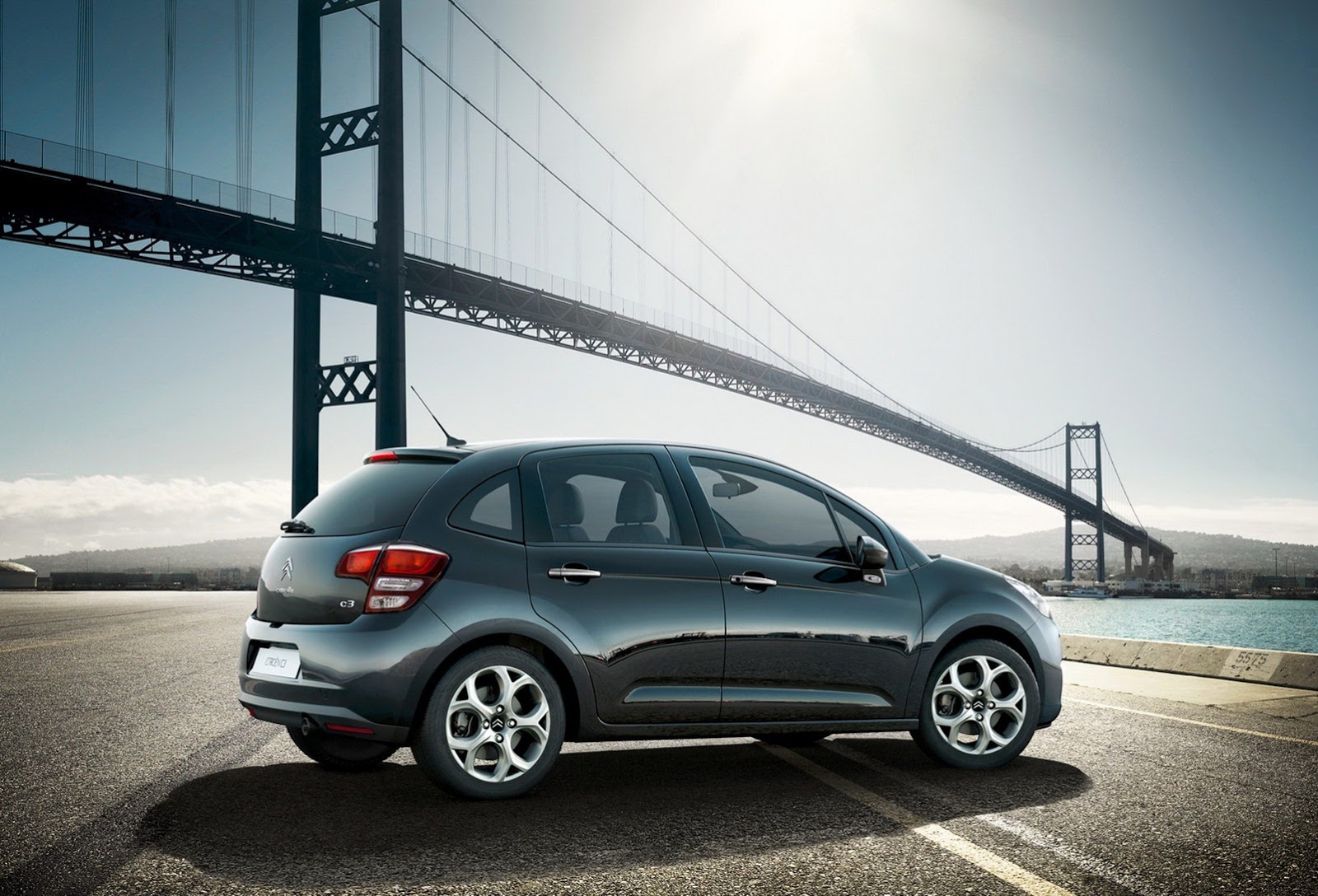
Lightly Restyled 2013 Citroen C3 Hatch Heads to Geneva Motor Show

The Geneva motor show will mark the world debut of the restyled C3, if you believe Citroën, or European debut if you take into consideration the updated C3 presented in Brazil last summer.

2013 Citroen C3 Hatchback

2013 Citroen C3 Hatchback

2013 Citroen C3 Hatchback

2013 Citroen C3 Hatchback2013 Citroen C3 Hatchback

2013 Citroen C3 Hatchback

On the outside, the European C3 gains the same suit of cosmetic upgrades as the Brazilian model including a new fascia with a double chevron grille and bumper-mounted LED daytime running lights, plus new tail light clusters combined with new reflectors set underneath the rear bumper. An available new Ink blue body paint completes the exterior revisions.

Stepping into the interior, there are new dashboard strips in matt black, brown or Moondust grey, which match the updated upholstery.

Citroën is also enhancing the C3's range with a new pair of PureTech 3-cylinder petrol engines with a 1.0 or 1.2-liter displacement and outputs of 67hp (68PS) and 81hp (82PS) respectively, borrowed from the new Peugeot 208.

The VTi 68 and VTi 82 PureTech engines return a fuel economy between 62.8 and 65.7mpg UK (4.5lt – 4.3lt/100km), and CO2 emissions between 99 and 104g/km.

A VTi 120 (118hp) petrol engine is also available with a manual or automatic gearbox, as are four diesel units, the HDi 70, e-HDi 70, HDi 90 and e-HDi 115.

European sales will begin after the Geneva Auto Salon, with the C3 facelift to arrive in the UK this summer.

Articles Source : Carscoop

Thursday, February 21, 2013

2013 Audi A3 e-tron Concept


Audi is working intently to electrify the drivetrain using plug-in hybrid technology. The brand with the four rings is showing the Audi A3 e-tron at the 2013 Geneva Motor Show. With 150 kW (204 hp) of system power and 350 Nm (258.15 lb-ft) of system torque, sporty performance is guaranteed.

2013 Audi A3 e-tron Concept

2013 Audi A3 e-tron Concept

2013 Audi A3 e-tron Concept

2013 Audi A3 e-tron Concept

2013 Audi A3 e-tron Concept

The Audi A3 e-tron is a true Audi. It sprints from 0 to 100 km/h (62.14 mph) in 7.6 seconds on its way to a top speed of 222 km/h (137.94 mph). According to the ECE standard for plug-in hybrid automobiles, the five-door model consumes on average just 1.5 liters of fuel per 100 km (156.81 US mpg), which corresponds to CO2 emissions of 35 grams per km (56.33 g/mile). In electric mode, the Audi A3 e-tron reaches a top speed of 130 km/h (80.78 mph) and has a maximum range of 50 km (31.07 miles).

The combustion engine is a modified 1.4 TFSI producing 110 kW (150 hp). A clutch links the TFSI to an electric motor with an output of 75 kW. The disc-shaped electric motor is integrated into a newly designed six-speed e-S tronic, which transfers the power to the front wheels. The two powerplants complement one another. The electric motor delivers its peak torque from start to around 2000 rpm, and the TFSI's maximum pulling power is available in a range from 1,750 to 4,000 rpm.

The Audi A3 e-tron can be driven with just the combustion engine, just the electric drive or in hybrid mode. Even in electric mode it offers powerful acceleration without the need to engage the TFSI. The driver can choose to have both powerplants active at the same time ("boosting"). When the driver lets up on the accelerator, they both deactivate temporarily ("gliding"). In this way motor braking torque is eliminated and efficiency increases.

At the 2013 Geneva Motor Show, the Audi A3 e-tron will provide a realistic glimpse into the future of mobility as Audi is planning it. The electrification of the drivetrain, above all using plug-in technology, plays a deciding role in the strategy of the brand.

Articles Source : Netcarshow

Wednesday, February 20, 2013

Chevy might've pulled out of NASCAR if it weren't for new Gen 6 car


We've been on the fence with NASCAR for some time now. On one hand, it's some of the closest racing anywhere in motorsports, with actual passing and door-handle-to-door-handle action as a matter of course. But on the other, it's become template racing – a personality-driven sport more about the drivers than any sort of loyalty to a particular automaker. The Car Of Tomorrow format really rammed that message home, with a racecar's identity coming down to little more than headlamp stickers slapped on the nose. That's not necessarily a bad thing in and of itself, but we've wondered for some time what's in it for the automakers, who pay big money to stay in a series that has had little increasingly little do with street car sales, let alone innovation.

2013 Nascar Chevrolet SS

2013 Nascar Chevrolet SS

2013 Nascar Chevrolet SS

2013 Nascar Chevrolet SS

2013 Nascar Chevrolet SS

2013 Nascar Chevrolet SS

Apparently General Motors was beginning to wonder the same thing. In a new ESPN report, Rick Hendrick, team owner of Hendrick Motorsports, suggests that GM would have seriously considered leaving NASCAR if it wasn't for the move away from the COT to the new Gen 6 racer. According to Hendrick, GM North America boss Mark Reuss spearheaded the charge away from the 2007 COT and toward a racecar with clearer automaker ties – cars like the new Chevrolet SS racer shown above. Learn more about the fight for a closer-to-production look in the ESPN story at the link.

Articles Source : Autoblog

2013 Mercedes-Benz SLS AMG GT


Mercedes-Benz SLS AMG plans to sell the GT models in mid-November. GT is not for the presence of SLS SLS complete range, but to replace it. Mercedes-Benz SLS AMG is no longer manufactured and is replaced by the SLS AMG is offered in a format GT Coupe and Roadster. Mercedes-Benz and AMG seems to not only tune the engine. They are also redesigning the adaptive performance of his suspension with stiffer springs and dampers are more tuned more aggressively.


2013 Mercedes-Benz SLS AMG GT

2013 Mercedes-Benz SLS AMG GT

2013 Mercedes-Benz SLS AMG GT

2013 Mercedes-Benz SLS AMG GT

2013 Mercedes-Benz SLS AMG GT

2013 Mercedes-Benz SLS AMG GT

2013 Mercedes-Benz SLS AMG GT engine, Mercedes SLS AMG engine for the GT is still equipped with the same engine, the AMG 3.6-liter V8. But the power it produces an increase of 20 hp or a 591 hp. With this engine, this car can run from 0 to 100 km / h in 3.7 seconds before reaching a speed of 200 km / h in 11.2 seconds. Movement of teeth also have functioned so well that the driver is easier to operate.

2013 Mercedes-Benz SLS AMG GT interior, improvements have also been done on the interior including the Designo package style. These optional extras comes with three different color combinations with a single color or two tone with the color contrast stitching with a diamond pattern on the seats and doors. There are also various other optional items, ranging from carbon fiber components of both the interior and exterior, the carbon-ceramic brakes, a Bang & Olufsen audio device to a different choice veleg.

Articles Source : Autostylized

Tuesday, February 19, 2013

2013 Hyundai i30 3-door


The i30 3-door is the third member of the i30 family, joining the Hyundai i30 Tourer and i30 5-door hatchback which made their public premiere earlier this year.

2013 Hyundai i30 3-door

2013 Hyundai i30 3-door

2013 Hyundai i30 3-door

Set to debut at the up-coming Paris Auto Show, the all-new i30 3-door’s styling is influenced by the carmaker’s latest “fluidic sculpture” design language. The new model features a slightly redesigned hexagonal grille, flanked by redesigned front foglights and daytime running lights.

Back at rear, the 2013 Hyundai i30 3-door sports a slightly redesigned bumper and restyled set of fog-lights.

Under the hood, the forthcoming i30 coupe will offer the same range of four-cylinder engines as the Hyundai i30 5-door, along with six-speed manual and automatic transmission options.

A more potent sporty variant is also headed for the Hyundai showrooms, according to latest rumors which suggest that the South Korean carmaker is preparing to launch a 200+ horsepower i30 turbo sometime next year. The car will kick-start the arrival of a host of future performance Hyundai models.

Full details of the 2013 Hyundai i30 3-door coupe will be released at the 2012 Paris Auto Show, where the model will make its inaugural public premiere before going on sale in Europe in the first half of 2013.

Articlea Source : Hyundaiblog

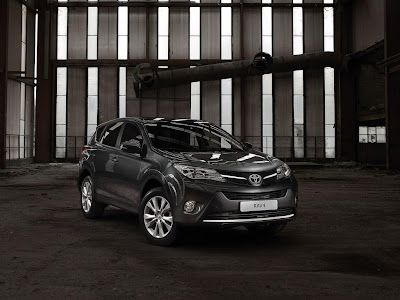
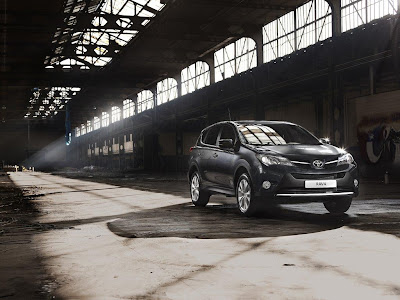
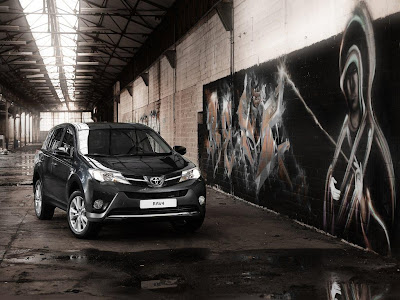
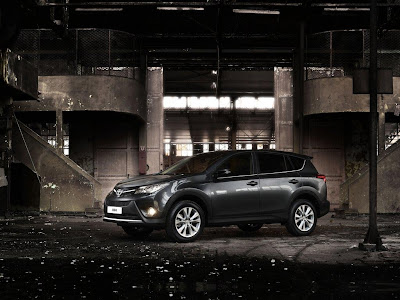
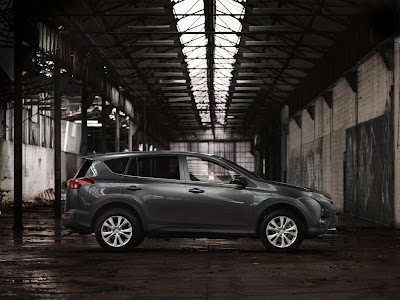
2013 Toyota RAV4 EU-Version


Toyota is proud to claim to have created the compact SUV market with the launch of its first Recreational Active Vehicle with 4 Wheel-Drive (RAV4) in 1994.

Launched as a compact (3.69 m), 3-door model, the first "Urban 4WD" was quite different to a traditional 4x4. It featured a relatively small, 2.0 litre engine mounted transversally within a monocoque bodyshell, and all-round independent suspension. The compact SUV market was born. Today, there are some 20 different models in the segment.

2013 Toyota RAV4-EU Version Front Angle

2013 Toyota RAV4-EU Version Front Angle

2013 Toyota RAV4-EU Version Front Angle

2013 Toyota RAV4-EU Version Front Angle

2013 Toyota RAV4-EU Version Front Angle
2013 Toyota  RAV4-EU Version Front Angle

2013 Toyota RAV4-EU Version Front Angle

2013 Toyota RAV4-EU Version Front Angle

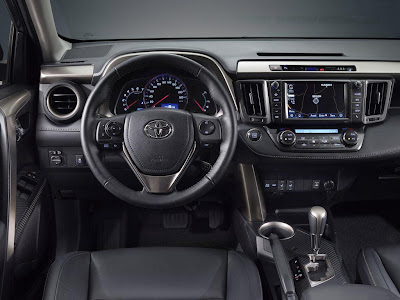
2013 Toyota RAV4-EU Version Interior

Available in over 150 countries, three generations of Toyota RAV4 have sold more than 4.5 million units since 1994, of which European markets have accounted for over 1.2 million sales.

The fundamental design features accounting for this success remain equally relevant for this fourth generation model. As for the last 18 years with previous model generations, the new RAV4 has been developed to fully respond to the evolving customer requirements of the core C-SUV market: active lifestyle families with a growing demand for space and versatility.

The new Toyota RAV4 reflects this stronger emphasis on family use building on its segment creating core values. The new RAV4 offers customers distinctive, sophisticated styling, refined, premium-quality interior design, a new Integrated Dynamic Drive System and an engaging drive with fuel efficient powertrains.

DESIGN

Longer (+205 mm), wider (+30 mm) but lower (-25 mm) than its predecessor, the fourth generation of Toyota's compact, versatile SUV showcases an all new silhouette that emphasizes its versatility, roominess and improved dynamic capabilities.

The all-new exterior combines the sophisticated, stylish signature elements of the new Toyota frontal design language with clean, frill-free aesthetics and the muscular image of durability expected from a vehicle with its class-leading four-wheel drive credentials.

The new face of Toyota combines the company's Under Priority grille design with Keen Look headlamp and LED Daytime Running Light (DRL) detailing to give the new SUV a powerful, more dynamic and agile-looking road presence.

The Under Priority design features a large, trapezoidal lower opening within the front bumper, and a smaller upper grille running full width between the new headlamps.

The black resin finish flows from the bottom corners of the lower bumper opening in the form of a tough, durable skirt around the base of the entire vehicle, including the wheel arches, providing off-road protection to the bodyshell and further emphasising the new SUV's muscular posture.

In profile, the new RAV4 inherits the combination of space-efficient packaging, rising belt-line and distinctive silhouette that has hallmarked successive generations of Toyota's compact SUV.

Above a more pronounced belt-line, blacked out B and C pillars emphasise the lengthened glasshouse and an increase in the vehicle's interior roominess. Below, the contrast of convex body surfacing and sharply concave treatment to the pronounced wheel arches and door cills brings added dynamism and strength to the new Toyota RAV4 silhouette.

To the rear, the cabin tapers strongly inwards, contrasting with the width of the lower body and creating muscular shoulders over the rear wheel arches to emphasis the vehicle's, stable, planted stance.

The increased strength of the belt-line and wheel arch shoulder at the rear of the car is further emphasised by a new rear combination lamp design which is generated by the proportions of the rear shoulder and flows around the corner of the vehicle to underscore the tailgate glazing.

Topped with an integral roof spoiler, the new tailgate itself is now top-hinged, and the spare wheel has been removed to complete the new RAV4's cleaner, more aerodynamically efficient design.

The new RAV4 will be available in a choice of nine body colours, including 3 new to the model range: Greyish Blue M.M., Moss Green and Black M.M.

Innovative, Higher Quality Interior Design

Combining a spacious, comfortable cabin with a cockpit-like driver's environment, the all-new interior design build's on the RAV4's inherent practicality with greater roominess, higher quality finishes and a more focused, engaging SUV driving experience.

Horizontal-lined design is used on the instrument panel in order to emphasize strength and wide-front design.

The dynamic, bold architecture of the new dashboard features powerful, upper and lower horizontal beams interrupted by a curved, metal-finish spar. Rooted in the transmission tunnel, the spar frames the driver's new instrument binnacle, steering wheel and footwell to reinforce the new Toyota RAV4 interior's more driver-focused credentials.

The clean, sophisticated elegance of the new design is further strengthened by the use of high quality materials, soft padding in many areas of occupant contact, crisp trim finishes and new colours throughout. Extended use of leather on the instrument panel contributes to emphasise the high quality feeling of the cabin.

All instrument and switchgear back-lighting is now a Clear Blue colour; a crisp, cool after-dark illumination which brings sophistication and a powerful visual consistency to the new interior.

Focused, Ergonomic Driving Position

With cockpit-like driver's environment, the driving position of the new RAV4 has been designed for excellent ergonomics, greater comfort, better forward visibility and a more engaging driving experience.

The driver's seat hip point has been lowered by 5 mm, the seat height adjustment range increased by 15 mm and the steering wheel angle lowered by 2.3 degrees.

At the same time, the driver's forward visibility has been improved. The A pillars have been repositioned to a more outward location, increasing the driver's forward field of vision by 3 degrees, and the cross-sectional width of the pillars themselves has been reduced by 8%.

Greater Space and Versatility

Though retaining the compact exterior dimensions essential to manoeuvrability, the new RAV4's overall length of 4.57 m and its wheel base length of 2660 mm equip it with significant additional interior space, bringing passenger roominess and loadspace up to a par with larger, D segment vehicles.

With a front to rear seat couple distance, now a best-in-class 970 mm, and a new thinner front seatback design, space at rear seats has been increased.

The 60:40 split folding rear seats have been made more comfortable, benefitting from an increase in cushion surface angle of 2 degrees and higher side bolsters for improved support.

Thanks to Toyota's unique, easy flat seating system, the RAV4 retains all the practical, flexible versatility its customers have come to expect from the compact SUV.

The rear seats may be split 60:40 for maximum flexibility and each section can be reclined independently.

The length of the loadspace has been increased, raising luggage capacity to 547 litres. Undertray storage has also increased by 49 litres from 51 to 100 litres.

The side-hung tailgate has been replaced by a top-hinged version, which may be equipped with power operation. At 645 mm, the new tailgate opening boasts the lowest loadspace lip height in its class, as well as a wide aperture of 1335 mm.

POWERTRAINS

Featuring two new powerplants -a 2.0 litre diesel for the Western European market and a 2.5 litre petrol unit for the Russian market- and with a 2.2 litre diesel engine now available in Russia for the first time, the new Toyota RAV4's comprehensive engine range offers an unmatched balance between outstanding, front- and four-wheel drive performance and class-leading CO2 emissions in all petrol and diesel variants.

Western European Engine Line-up

The Western European powertrain line up now comprises a 151 DIN hp 2.0 litre petrol engine, a new 124 DIN hp 2.0 litre diesel, and a powerful 150 DIN hp 2.2 litre D-4D diesel engine.

Every engine in this new line-up benefits from reductions in CO2 emissions, averaging some 12% across the powerplant range.

Of particular note, the 2.0 litre diesel, front-wheel drive derivative new to the RAV4 range is equipped with Toyota's Stop & Start technology, reducing CO2 emission to only 127 g/km.

Eastern European Engine Line-up

The Eastern European powertrain line up comprises a 145 DIN hp 2.0 litre petrol engine, a new, 180 DIN hp 2.5 litre petrol engine, and a newly available, 150 DIN hp 2.2 litre D-4D diesel engine.

DRIVING PERFORMANCE

Successive generations of RAV4 have established a reputation for their ride comfort, ease of driving, manoeuvrability and reassuring capabilities on even the most challenging of road surfaces.

In conjunction with a new, more comfortable and focused driving position, the new Toyota RAV4 builds on these key SUV attributes with retuned front and rear suspension systems, revised Electric Power Steering, and a New Integrated Dynamic Drive System with all-new Sport mode function.

In combination, these developments award the new RAV4 greater stability and agility on both wet and dry roads, offering customers a confidence-inspiring, more intuitive and engaging driving experience.

The new RAV4 is also available with both Down-hill Assist and Hill Start Assist Control. Fitted as standard to all vehicles equipped with automatic transmission and particularly useful during icy or snowy descents, Down-hill Assist Control automatically regulates gear selection, engine speed and the individual wheel braking capabilities of the ABS system to help the driver maintain skid-free control of the vehicle on slippery descents.

Integrated Dynamic Drive System

The Integrated Dynamic Drive System is a sophisticated, high-speed interactive management system which coordinates control of the Toyota RAV4's new Dynamic Torque Control 4WD, Vehicle Stability Control (VSC) and Electric Power Steering (EPS) systems to enhance the compact SUV's performance, handling and safety.

The new Dynamic Torque Control 4WD system continuously monitors and controls the torque transfer between the front and rear wheels via an electromagnetically controlled coupling positioned in front of the rear differential.

Front to rear torque distribution can vary from 100:0 to 50:50, with front-wheel drive (100:0) automatically engaged under normal driving conditions to improve fuel consumption.

The Dynamic Torque Control 4WD system uses information sent from various sensors (speed, steering angle, throttle angle and yaw rate) to automatically govern the transmission of torque to the rear wheels, as required.

In Normal mode -when neither Sport mode nor Lock mode are activated- torque transfer to the rear wheels will take place not only when the slip is detected (as in thethird generation RAV4), but also when the system detects understeer during cornering on-road. As a result, the overall agility and driving performance of the new RAV4 is enhanced during both on- and off-road driving.

When all new Sport mode (standard on AWD models) is selected, torque transfer to the rear wheels will start from the moment the steering wheel is turned. The new Dynamic Torque Control AWD System, with the feedback from driver steering input, will adjust automatically a 90:10 front/rear torque distribution to reduce the load on the front tyres.

If later, an actual understeer develops, torque transfer to the rear wheels is automatically increased by up to 50%, further reducing front tyre loading to provide improved lateral grip.

As well as activating the 'Dynamic' behaviour of the system's front to rear torque transfer, the new Sport mode also modifies the Toyota RAV4's power steering, throttle and transmissions; decreasing power steering assistance, sharpening throttle response and offering higher revs', automatic and CVT gearbox management, for a more dynamic, sporting driving experience.

For off-road driving, the system incorporates a 4WD Lock button. This allows drivers to lock torque distribution in a fixed, 50/50 ratio at speeds up to 40 km/h.

SAFETY AND TECHNOLOGY

The new Toyota RAV4 builds on the very highest standards of occupant safety and pedestrian impact protection evolved over three generations of the compact Toyota SUV, with even higher levels of active and passive safety.

With a new, high rigidity, multi-path impact load body designed to provide optimum occupant and pedestrian impact protection, the new RAV4 has been engineered to achieve a 5-Star rating in the gruelling, 2013 Euro NCAP crash test programme.

The new Toyota SUV is equipped with a new anti-whiplash seat design, and 7 airbags are fitted as standard, including a driver's knee airbag and twin-chamber front seat side airbags.

The new Toyota RAV4 may also be equipped with three new technologies -an Automatic High Beam system, a Lane Departure Alert system and a Blind Spot Monitor system- further raising standards of safety and driver convenience.

Automatic High Beam system

The Automatic High Beam system employs a camera to monitor the road ahead and automatically switches the headlamps from high to low beam when it detects either a preceding or oncoming vehicle.

Lane Departure Alert system

The Lane Departure Alert system employs a lane recognition camera sensor mounted at the head of the windscreen to determine if the vehicle is unintentionally leaving its lane. The system then alerts the driver via an audible warning buzzer and a flashing line icon in the multi-information display.

Blind Spot Monitor system

The Blind Spot Warning system notifies drivers of a vehicle travelling in an adjacent lane in their blind spot by illuminating the relevant indicator mounted in the outer door mirror surface. The system uses radar sensors mounted on both sides of the rear of the new RAV4, which monitor the blind area of the driver. If the turn signal lamp switch is in operation, the indicator will flash at fixed intervals to alert the driver.

Articlea Source : Netcarshow

Friday, February 15, 2013

2013 Qoros 3 Estate Concept

At its global debut at the 2013 Geneva International Motor Show, new automotive brand, Qoros, presents the world premiere of its first series production vehicle, an elegant compact (C-segment) car with the official international model designation, the Qoros 3 Sedan.

In addition, two concept studies provide a clear indication of the new manufacturer’s future model family expansion plans.

2013 Qoros 3 Estate Concept

2013 Qoros 3 Estate Concept

2013 Qoros 3 Estate Concept

With the brand starting from a clean-sheet, Qoros vehicles are elegantly styled and focus on quality and value, and on meeting the lifestyle needs and expectations of modern, metropolitan, ‘always-connected’ target customers in China and Europe.

The Qoros 3 Sedan, which is entering a pre-production development phase after two summers and two winters of extensive testing at key locations around the world, is due to be launched in China in the second half of 2013, with first European sales following later in the year.  The launch of further Qoros models is then planned at intervals of approximately six months.

To be produced in a new assembly plant in Changshu, China, the new range of Qoros models is being designed and engineered by an international team of experienced specialists and new, young automotive talent, and has been developed with the support of internationally-renowned suppliers such as Magna Steyr, TRW, Continental, Bosch, Getrag, Benteler, Lear, Microsoft, Harman, Neusoft-Alpine and Iconmobile.

Rapid expansion of the model range will be achieved thanks to an innovative modular vehicle architecture developed in-house at Qoros.  The clean, elegant styling direction – drawing heavily on contemporary European themes – has been developed to give all Qoros models an unmistakable brand identity.

Designed to offer generous space and a high-quality interior finish, Qoros models will also feature an infotainment system which is unique in the automotive field.  Featuring an eight-inch capacitive touchscreen, the system was developed in-house by Qoros with displays designed for minimal driver distraction, replacing the array of switches and buttons that blight many modern car interiors.  The system features an advanced navigation system, extensive social networking connectivity and the ability for drivers to monitor their car’s health and, for example, to book dealer service appointments.

Qoros aims to achieve top scores on both European and Chinese crash tests for all its models.

Founded in 2007, Qoros is an equal joint venture partnership between Chery Automobile, China’s biggest independent automotive manufacturer, and Israel Corporation, a global industrial holding company.

Qoros is headquartered in Changshu, a region of great importance to China’s rapidly expanding automotive industry, where construction of its all-new, highly-efficient and environmentally-sustainable production facility is nearing completion.  “The factory has an initial annual production capacity of 150,000 units, with potential for expansion to 450,000 units,” explains Alexander Wortberg, Qoros’ Director of Production (formerly of BMW).

Qoros operates an engineering centre in Shanghai, which is also the base for many commercial and purchasing functions, with further operations in Munich (Germany) and Graz (Austria).

The Qoros 3 Estate Concept showcases a vision of a future variant with a bodystyle that is especially popular among European motorists and is geared towards the travel needs of modern families, providing generous and highly versatile interior space.

Using the same platform and distinctive clean, elegant styling of the Qoros 3 Sedan, it features a sympathetically elongated roofline and a large tailgate.  The signature horizontal styling themes emphasise the long body profile and the large side windows give the five-door estate body an athletically-pleasing, stretched look.

The Qoros 3 Estate Concept features an intelligently designed interior that provides an incredibly versatile and adaptable space that allows luggage capacity to be adapted to meet the needs and lifestyles of European consumers.  The rear seats fold to leave a flat load floor, and also incorporate a ski hatch.

A great deal of thought has been given to the development of a wide range of storage compartments and attachment fittings that optimise the functionality of the cabin for both everyday trips and long-distance travel.

Articles Source : Autocarsupdate

Thursday, February 14, 2013

2013 Toyota Auris Touring Sports


The new Toyota Auris Touring Sports adds a popular wagon body style to the model range's comprehensive choice of powertrains. It is the first wagon in the segment available with a full hybrid powertrain, representing a further diversification of Toyota's application of its Hybrid Synergy Drive technology.

The new Toyota Auris Touring Sports combines dynamic design with segment-best functionality and superior loadspace. With battery located beneath the rear seats, the installation of the HSD powertrain offers no compromise to either loadspace or luggage capacity.

2013 Toyota Auris Touring Sports

2013 Toyota Auris Touring Sports

2013 Toyota Auris Touring Sports

2013 Toyota Auris Touring Sports

2013 Toyota Auris Touring Sports

2013 Toyota Auris Touring Sports

Wagon variants currently represent 25% of the C-segment sales mix, with 76% of those sales attributed to the fleet market. The new Auris Touring Sports will further broaden the appeal of the Auris range, helping to increase the model's segment share to over 5.0% by 2014, its first full year of European sales.

Design and Packaging

Sharing its 2,600 mm wheelbase and 10.4 metre turning circle, the Toyota Auris Touring Sports is 285 mm longer than the hatchback, all of which is dedicated to the extended loadspace.

Rear seats in place, the loadspace is 1115 mm long and 1452 mm wide with a superior capacity of 530 litres. With the rear seats folded flat, loadspace length increases to a maximum length of 2047 mm, a maximum height of up to 890 mm and a class-leading total capacity of 1658 litres.

This superior luggage capacity is matched by segment-best functionality. The Toyota Auris Touring Sports is the only C-segment wagon to offer customers the combined benefits of Toyota's Easy Flat, one-touch foldable rear seats, a double level loadspace floor, a two-way tonneau cover, a roller-type luggage net, shopping bag hooks, aluminium roof rails and a 12 V outlet in the luggage compartment.

As with the new hatchback, the Toyota Auris Touring Sports' bold, dynamic exterior design maximises the aerodynamic benefits of the model's reduction in overall height, and the dynamic improvements offered by its lower centre of gravity.

The new Auris Touring Sports shares the hatchback's new frontal design, which combines Toyota's Under Priority design language with Keen Look detailing to give a powerful yet elegant road presence.

In profile, the Toyota Auris Touring Sports also shares the hatchback's steeply raked windscreen, which flows into an extended roofline featuring aluminium roof rails and an integral rear spoiler. At 1553 mm long by 960 mm wide, the optional Skyview panoramic sunroof is one of the largest in the segment and further strengthens the impression of roominess created by the all-new interior.

The extended, three-panel side glazing features blacked-out pillars, including a piano black finish to the B pillar, and is underscored by chrome-accented trim above the bodywork's powerful, rising beltline crease.

To the rear, the Toyota Auris Touring Sports features a new bumper and tailgate design, with the loadspace sill set 100 mm lower than that of the hatchback, above a chrome floating rear spoiler. As with the rest of the Auris range, a new, wraparound rear combination lamp design reinforces the shape of the rear wing, new D pillar design and rear screen.

Driving Performance

Reinforcing Toyota's commitment to improving the dynamic abilities of its vehicles to offer customers a more engaging driving experience, the Auris Touring Sports benefits from all the improvements made to the new Auris hatchback.

If features an increase in bodyshell rigidity, a lower centre of gravity, enhancements to suspension and steering, a better driving position and improved NVH characteristics to offer drivers a more comfortable and engaging driving experience.

The Toyota Auris Touring Sports will be available with the same engine range as the Auris hatchback; a choice of 1.33 litre Dual VVT-i and 1.6 litre Valvematic petrol engines, improved 1.4 litre and 2.0 litre D-4D diesel engines, and the first full hybrid powertrain in the C-segment wagon market.

Capable of operating both independently and in combination, the HSD system's 1.8 litre VVT-i petrol engine and electric motor generate a maximum power output of 136 DIN hp (100 kW), equipping the Auris Hybrid Touring Sports with a 0-100 km/h acceleration time of 10.9 seconds and a maximum speed of 180 km/h.

Conversely, the Toyota Auris Touring Sports full hybrid returns class-leading CO2 emissions of only 86 g/km, and significantly lower NOx and NO particulate emissions than diesel engined cars of comparable performance.

In conjunction with Toyota's Stop & Start technology and an advanced Multidrive S transmission, CO2 emissions are highly competitive across the entire Auris Touring Sports engine range. The 1.33 and 1.6 litre petrol engines generate 127 and 139 g/km respectively, the 2.0 litre diesel 115 g/km, and the 1.4 litre diesel just 109 g/km.

Articles Source : Netcarshow

2013 Renault Clio RS 200


If you were waiting for the new Renault Clio RS 200 to have a normally-aspirated engine and a manual gearbox, you are out of luck as the new model is a more focused hot hatch than its predecessor. It will be sold only with a turbocharged 1.6-liter engine linked to a 6-speed dual-clutch automatic gearbox. It has the same amount of power as the model it replaces – 197 bhp (147 kW) – but at 6,000 rpm as opposed to the outgoing version which provides the entire horsepower at 7,200 rpm.

2013 Renault Clio RS 200

2013 Renault Clio RS 200

2013 Renault Clio RS 200

2013 Renault Clio RS 200

2013 Renault Clio RS 200

2013 Renault Clio RS 200

2013 Renault Clio RS 200

2013 Renault Clio RS 200

The torque figure is also up by 19 lb-ft (26 Nm) to 177 lb-ft (234 Nm). It reaches this peak torque at 1,750 rpm, considerably less than the old model’s 5,400 rpm. That dual-clutch transmission that we mentioned it’s called EDC – Efficient Dual Clutch and can either be left alone working on its own or it can be manually controlled with the help of the shifters mounted on the steering wheel. When in Race mode, changing a gear takes a mere 150 milliseconds.
There’s also the Normal and Sport model which are selectable with the help of an RS button. The changes made have to do with the engine parameters and gearbox mapping, as wheel as the response of the throttle pedal and the steering feel.

Unfortunately the French automaker did not release any performance figures, but when Race mode is activated it’s safe to assume that the 0-62 mph (0-100 km/h) is achieved in less than 6.5 seconds. We should also mention that the Renault Clio RS 200 will be offered with an optional Launch Control system so the sprint will be achieved even quicker.

As standard, the hot hatch comes with 17-inch alloy wheels but for more money 18-inch alloys are available. The stopping power comes from the 320mm discs at the front which are 8mm bigger than the ones on the outgoing Clio RS.

The design is what you’d expect from an RS model, looking more aggressive than the standard fourth-gen Clio, with a front F1-style blade, a spoiler and rear diffuser, LED DRLs, sill extensions and redesigned bumpers. The cabin is red-trimmed and includes sports bucket seats that for additional money can be wrapped around in leather. Standard goodies include starter button, hands free entry, Bluetooth and USB support, touchscreen navigation and the company’s new R-Link infotainment system. Parking sensors and automatic climate control are on the options list.

Articles Source : Auto Concept